
Josh Reviews Avatar: Fire and Ash
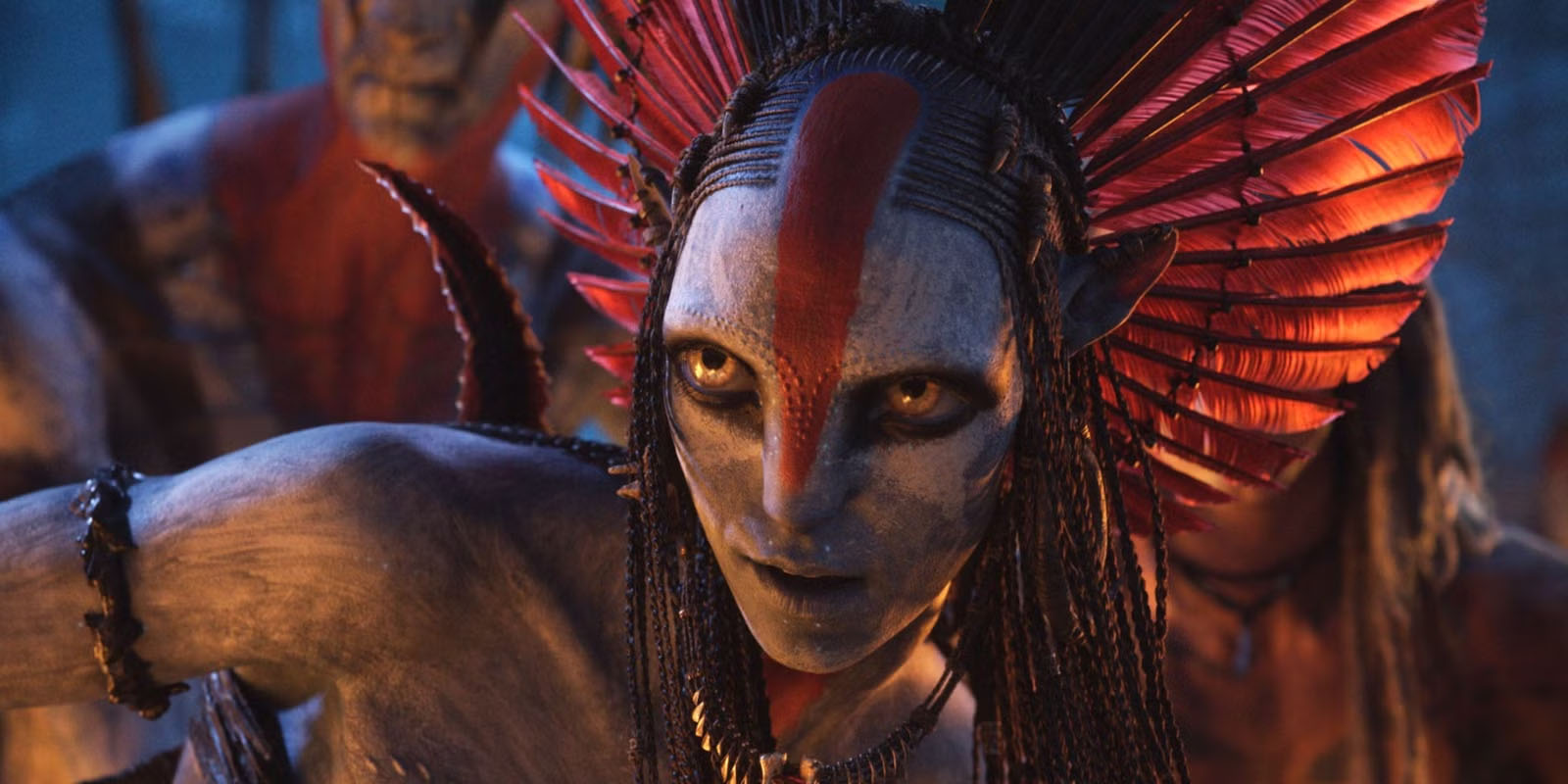
Avatar: Fire and Ash picks up shortly after the end of the previous film, Avatar: The Way of Water. The Sully family are fractured, each dealing (or not) with the trauma of the death of Jake & Neytiri’s eldest son Neteyam in their own way. Neytiri’s grief has curdled in her to a hatred of all humans, causing her to reject the human boy, Spider, despite her children seeing him as part of their family. The Sully family’s enemies continue to multiply: Colonel Quaritch has survived and is hunting them with a vengeance; General Ardmore is ready to bring the full force of her military might into play to pacify the Na’vi; administrator Selfridge wants to capture Spider, because he sees in him the key to a technological advancement that will allow humanity can easily colonize Pandora; while Varang, the rage-filled leader of the volcano-dwelling Mangkwan clan, wants to use the weaponry of the humans to expand her power across Pandora.
This is a hard movie to evaluate. On the one hand, if you enjoy the Avatar series, then this new sequel represents over three hours of new adventures in this world and that will certainly bring you great joy. This is an enormous movie, filled to overflowing with plot and spectacle. The visuals are absolutely wall-to-wall extraordinary. No one else besides James Cameron is making movies like this. This is epic storytelling on an enormous canvas, and this movie represents an outstanding achievement on every technical level.
To say this film looks amazing is an understatement. Right from the very first second of this movie — an incredible shot of two Na’vi boys flying through the air on their winged banshees — through the three hours and 17 minutes that follows, I was blown away by what I was seeing. James Cameron and his team have created a completely convincing fantasy world. Every single shot of this movie is an incredible visual effects achievement. I didn’t for a second doubt the reality of what I was seeing, even though almost this entire film — all the Na’vi characters, all the creatures, all the locations across Pandora — are visual effects. The way motion capture has been used to blend the subtle nuances of the actors’ performances with the completely fantastical Na’vi character designs is next-level extraordinary. (I spent a lot of the movie watching the flickering of the ears on the Na’vi characters and being so impressed by the subtlety of the acting expressed in those animated ear-movements!) The visual effects in this film are a universe above what we’re seeing in any other special-effects-filled film. It’s an extraordinary experience to watch in a movie theatre, just as the two previous Avatar films were.
On the other hand, this incredibly lengthy film isn’t structured like any other movie I can think of. (Aside from, perhaps, the two previous Avatar films.) The film has an unusual start-and-stop pace, and it is filled with all sorts of digressions that would have been edited out of a more normally-paced movie with a more standard run-time. There’s a whole story early in the film in which the Sully kids (including Spider) get lost in the jungle after an attack and are menaced by the evil Mangkwan clan, while Jake and Quaritch have to put aside their differences and work together to save the kids they both care about. It’s a cool part of the movie, with some great action and some interesting character beats. Watching the story unfold, I thought this would be a major part of the film’s story, but it’s resolved fairly quickly and the movie quickly moves onto other things. (That sequence feels like one episode in the season of TV storytelling packed into this one movie.) By the time we arrive at the end, that earlier sequence seems almost irrelevant. Here’s another example: much, much later in the movie, there’s a tense sequence in which Quaritch and the military have tracked Jake and his family to the island with the Metkayina clan where they’ve been hiding out since the previous movie. I thought, OK, here comes the big final action sequence. But nope; there is still lots and lots of movie left before we get to that final battle. If I was judging this like a normal movie, I might say these examples are evidence of a strange and clumsy structure. And maybe they are! But on the other hand, James Cameron clearly doesn’t want this to be a normal movie! The movie’s epic length allows it to contain many mini-storylines and sequences that are all a part of this greater three-and-a-half-hour whole. So should I criticize the movie for that? It’s hard to say!
Fire and Ash was originally part of the story for The Way of Water, before Mr. Cameron and his team decided to split this off into its own film. As a result, the film picks up several story threads that I thought were left curiously unresolved at the end of The Way of Water. (At the time I thought it strange that such a lengthy movie would leave so many plot threads dangling.) At the end of The Way of Water, we still didn’t know the secret of Kiri’s parentage or the nature of her powers; Spider seemed to still be caught between his two father figures, Jake & Quaritch; Quaritch was still alive and a menace to the Sully family; Neytiri’s drift into hatred towards all humans had been suggested but not really addressed in the story; etc. I was pleased to see resolution to those storylines in this film. On the other hand, this lengthy film also, in a similar fashion, leaves many new storylines unresolved. (I’ll detail those later in the spoiler section of this review.) In some ways, this film feels like even less of a complete story than the previous two. So again, on the one hand, that feels like a weakness of the structure of this film’s narrative. A normal movie should feel like it tells a complete story, with a beginning, middle, and end. On the other hand, this is the third part of a planned five-movie story. This movie wasn’t designed to tell a complete story! So should I criticize the movie for this? Again, it’s hard to say! Part of me feels unsatisfied by this movie, while the other part of me is yelling at this first part, asking how spoiled I am to be complaining about any aspect of this jaw-dropping epic that just exploded against my senses!
The film is replete with incredible action scenes. No one can direct an action scene like James Cameron. The initial Mangkwan attack on the floating merchant ship convoy is astounding. (The moment in which we see Jake running across the top of the rapidly-deflating bubble was thrilling.) And that third act… wow. Neytiri’s rescue of Jake from the human military base was amazing, and of course the whole last 45 minutes or so was an incredible, enormous battle sequence above, below, and on the surface of the water. Mr. Cameron’s mastery of staging and editing, to keep the movement and relationship of characters clear even in the midst of total chaos, is so impressive. However, I will note how strange it is that the broad strokes of this film’s final battle feel quite similar to those of the final battle in The Way of Water. It sort of feels like when the second film was split into two parts, Mr. Cameron took his original water-battle ending and put it at the end of The Way of Water, but then also kept that battle for the end of film three, rather than coming up with a different plan. (It’s sort of like how Richard Donner took the “Superman turns the world back in time” ending originally planned for Superman II and put it at the end of the first film; then, years later, when they created the “Donner Cut” of Superman II, they kept that same ending rather than replacing it with something else.) I have no idea if that’s what happened here; that’s just what it felt like to me. I’d been expecting this film to move into a completely different environment for its climax, such as the domain of the evil fire & ash Na’vi. We didn’t see as much in this film of their home and culture as I’d expected to, based on how each of the first two films dug deep into one specific Na’vi clan and their way of life. For a film called Fire and Ash, we didn’t get as much fire and ash as I’d expected.
It’s fascinating to think that these movies were filmed years ago. Filming began concurrently with the production of The Way of Water, way back in 2017! Filming was mostly completed by the end of 2020. That was a long time ago! It takes a long time to make these movies. The enormous size of this endeavor is impressive to contemplate.
So, do I recommend Avatar: Fire and Ash? If you enjoyed the first two, then definitely YES! Watch it on the largest screen you can. Try to see it in 3D and HFR (high frame rate) if at all possible, as god and James Cameron intended. (I did, and the experience was joyous.) Do I care as much about these characters as I wish I did? No. Do I feel that this film tells a complete and satisfying story? No. Is it still an incredibly fun time in a movie theater? Yes indeed!! (Just empty your bladder before settling into your seat! I wish this film came with an intermission!)
Shall we dig deeper? Beware SPOILERS ahead!
SPOILER WARNING: I mean it!
The character who was best served in this film, in my opinion, was Quaritch (Stephen Lang). Back when I first saw The Way of Water, I was somewhat disappointed to have the same villain back from the first film despite his death. But here, I loved watching him ally himself with Varang and her clan of Na’vi; that was a fun and surprising move for this character. In this movie, Quaritch got to be evil and menacing but also very funny. (The scene where he gets high with Varang was a delight!) I loved seeing Quaritch — who started hating Pandora and everything about it — going native. Seeing him fully painted like one of the Ash tribe at the end was a shock! This is one of the most interesting character arcs in the series. I wish they’d gone further! I’d have loved to have seen Quaritch fully embrace the ways of Varang and her Mangkwan clan! Or, the other direction: I was intrigued by hints that maybe Jake could get through Quaritch’s thick skull to get him to see the value of the Na’vi ways and life on Pandora. I started to think it’d have been really cool to have redeemed this awful villain, and have him become a gruff and surprising ally to the Sullys by the end of this film. The movie didn’t go there; oh well.
I continue to wish the movie’s main character of Jake Sully (Sam Worthington) was more interesting. The Way of Water shows us that he was running his family like a military squad. Wouldn’t it have been interesting to see him wrestle with that, to learn that maybe that’s not a great way to relate to your family, especially your kids? But the movie doesn’t really go there. I’d have loved to have seen Jake forced to reckon more with his choices here in this third film. Jake seemed to finally connect with his son Lo’ak at the end of The Way of Water, telling him the key words: “I see you”. But the two have to go through basically the same arc again here. That wasn’t that interesting to me.
I felt Neytiri (Zoe Saldaña) was mostly sidelined in The Way of Water, so I was happy to see her given more to do here. It was a good choice to explore how hateful she had become because of her trauma . That was an interesting move for the heroine of the first film! I liked how that played out. The scene in which Neytiri is washing the blood off her hands and realizes that she doesn’t want Spider to die was well done. The only problem was that after that, Neytiri didn’t have much to do for the rest of the movie other than help deliver Ronal’s baby.
Oona Chaplin (Talisa on Game of Thrones) is a wonderful addition to the ensemble as Varang, the evil leader of the Mangkwan “ash” clan. Ms. Chaplin does great work bringing this character to life. I love her sexiness and her swagger. It’s interesting to see an angry and self-destructive Na’vi. To this point, the Na’vi all lived in harmony with their world, and the humans were the villains. I liked seeing some Na’vi who weren’t pure and noble. (I wish the film better explored what happened to Varang’s people. Why did Eywa reject them? Or was it Varang and her people who rejected the natural cycle of life and death in their desire for power over others?) Seeing Varang use her “queue” to take control of other Na’vi was a fascinating and dark turn in this movie. It felt to me almost like a mind rape. This is another aspect of the story I wish the film had explored the fallout of that. The Na’vi must see that as a tremendous violation, no?
I liked Lo’ak (Britain Dalton) in The Way of Water, and particularly upon a repeat viewing I keyed into his story. (The first time I watched The Way of Water, I had trouble telling the kids apart.) So I was happy to see him continue to be central to the story here. Seeing him wrestle with suicidal thoughts was a surprisingly dark turn! I like when this film actually digs into the emotional life of its (many) characters. I want more of that.
I loved that Kiri (Sigourney Weaver) really stepped into the spotlight here. I love Ms. Weaver’s work as this character! She really stands out among all the blue Na’vi characters in this film. The design and look of the character is great — she’s 76-year-old Sigourney Weaver and also a 15 year old kid, and also a giant blue alien, all in one!! The animation on Kiri’s face is truly next level. Ms. Weaver’s acting really shines through. It’s nice to see a character as sweet and noble as Kiri get to be a hero, and to use her connection to the natural world to win the day, rather than a gun. (I was a little surprised to see her use her connection to Eywa at the end to give the sea creatures a vicious command to “kill them all”. I wish this film better interrogated the balance between pacifism and warfare in this story and these characters. More on this later.)
I enjoyed the addition of all the kids in The Way of Water — the four Sully kids and the three Metkayina. I wish the three Metkayina had more to do in this film. The chief’s daughter Tsireya (Bailey Bass) was great in The Way of Water, but this film gave her very little to do other than sort of moon over Lo’ak. I wish she’d been able to take a more active role. And one of the two Metkayina brothers dies at the end of the movie — I think — but the movie never returns to address that or show us any characters being upset about that. It’s a strange omission. If we do continue to get more Avatar films, I’d love to see this story expand to become more of a generational saga, with these kids stepping into the lead roles in place of Jake and Neytiri.
I also wish the Metkayina clan leaders — Tonowari (Cliff Curtis) and Ronal (Kate Winslet) — had more to do in this story. Ronal in particular was a fierce presence in The Way of Water, but here she doesn’t do much other than give birth and die. It feels like a waste of an interesting character. I can’t believe the film doesn’t allow us a moment at the end to show us Tonowari’s reaction to learning that his wife (and also one of his sons?) has died in the battle.
Jack Champion is great as Spider. It’s a very physical role — the guy has to do a lot of running and jumping and fighting, all while being mostly naked for the entire movie. Mr. Champion does nice work balancing Spider’s toughness with his innocence. He is a young kid after all! Seeing Spider trying to find his own way between the two worlds of the Na’vi and the humans was one of my favorite storylines in this film.
I didn’t think Jemaine Clement’s Dr. Ian Garvin had survived the last film, so I was happy to see him back and given an opportunity to be a hero. I was sure he’d get killed during the prison break, but to my surprise he survived! I wish we’d gotten one last moment with him at the end of the film. I wonder if we’ll ever see this character again.
There are some quick jumps around the geography of Pandora in the middle of this movie that felt strange. The Sullys briefly wind up back on the Omaticaya resistance base up in the floating mountains. (It was nice to see a few familiar faces from the first movie again, but we only get a few quick moments with them and then they’re forgotten. I thought the return to the floating mountains would mean we’d see the Omatikaya and Metkayina clans uniting to fight the humans in the climax. And maybe we did? Strangely, I thought the movie left that unclear. We did see a lot of Na’vi fighters on flying banshees, so maybe they were Omatikaya? On the other hand, we didn’t see any familiar Omatikaya faces in the final battle.) Anyways, back to my point, after that brief return to the floating mountains, the gang is quickly back in the Metkayina village, even though I’d thought from The Way of Water that it was an arduous, multi-day journey away. Later in the film, Jake says to summon all the clans within a day’s ride, and then I think we see shots of Omatikaya fighters lifting off from the floating mountain… so maybe that base wasn’t as far away as The Way of Water made it seem? But if it was within a day’s travel, that doesn’t feel like far enough away to have made sense as a hiding spot for the Sullys, does it? So I’m left somewhat confused on this point.
I wish I felt like the ending of this three-and-a-half-hour movie left things more resolved. But there were so many dangling threads. I’ve mentioned a bunch already; here are some others: We still don’t really know why Eywa created Kiri — what is her reason for being? — and why Eywa refused to communicate with her for most of the movie. We get a little movement on the romances between Kiri and Spider, and Lo’ak and Tsireya, but not much. Varang survived to menace our heroes another day; and we don’t know if General Ardmore (Edie Falco) survived too. (It looked like she died when the the big boat exploded, but the villains of this series seem to survive their apparent deaths — see Quaritch returning for film two and Captain Scoresby returning, now with a mechanical arm, for this film.) I liked that they brought back Giovanni Ribisi’s character, Selfridge; I liked that connection to the first film, even if Selfridge didn’t have much to do here. It’s a reminder that he too is still alive and a menace to Pandora. Curiously, none of these films have shown any of the hero characters attempting to address, or even think about, the larger problem that nothing is stopping the humans from continuing to come back and menace the Na’vi. Surely, if we get more films in this franchise, that is going to have to become part of the story, right?
Here’s another larger issue the films strangely (to me) continue to avoid. This film stubbornly continues this series’ refusal to dig into the philosophical issues at play between the Na’vi’s general pacifism (seen in the various Metkayina clans and most especially in the wise, elderly leaders of the giant Tulkun) and the belief that sometimes it is necessary, and perhaps heroic and noble, to fight. These Avatar movies always end up in a ginormous battle. We in the audience want to see those exciting spectacles. So we tend to be on the side of the various Sullys who are trying to convince the natives of Pandora to stand up and fight. I wish the movies would actually dig deeper into this issue, because the pacifists are correct that once you step into violence, it is nearly impossible to break out of that expanding cycle of death and pain. On the other hand, it’s also persuasive to argue that some evils are so wrong that they must be fought. The series has to get into these issues eventually, right? Otherwise what is the ultimate end-game of this multi-film story? I doubt it will end in a forever war, so somehow the Na’vi and the humans are going to have to break the cycle of violence they are currently stuck in, and find a way to work together. I’d like to see at least one character start to think along those lines.
OK, time to start wrapping this review up. As you can see, there’s a lot to write about and debate/discuss. This film is packed with characters and plot! I like that about the film. I love the ambition in the storytelling and world-building. I have a lot of plot/character complaints, that I’ve written about at length in this review, but for good or for ill that all pales before the epic spectacle of this film’s imagery. I had a blast kicking back with a tub of popcorn in a movie theatre to watch this.
At this point, I am torn in that, on the one hand, I want Mr. Cameron to complete his planned five-film saga. On the other hand, I’d really love to see him make other movies than just these! It’s wild to think that Mr. Cameron has basically only been making Avatar movies for the past two-to-three decades. (Mr. Cameron’s most recent non-Avatar narrative film was 1997’s Titanic!!) But, you know, James Cameron is an artist and a genius. I’m happy to follow him to whatever projects he chooses to undertake next.
Please support my website by clicking through one of my Amazon links the next time you need to shop! As an Amazon Associate, I earn from qualifying purchases. That means I’ll receive a small percentage from ANY product you purchase from Amazon within 24 hours after clicking through. Thank you!