Josh Reviews Light and Magic: Season Two
I loved the first season of Light and Magic, which came out in 2022, and it was an unexpected pleasure to get a second season this past year!
That first season of Light and Magic was a six-episode series on Disney+ that charted the development of Industrial Light & Magic, the special effects company started by George Lucas to create the groundbreaking effects for the original Star Wars in 1977. The series explored ILM’s ground-breaking work on so many movies, beginning with Star Wars in 1977 and on to so many of the most visually dazzling movies of the last half-century: many of the Star Trek films, the Indiana Jones films (and pretty much every other movie Steven Spielberg has ever made, most notably Jurassic Park), Willow, Back to the Future, The Abyss, T2: Judgment Day, Forrest Gump, Jumanji, The Mummy, Mission: Impossible… and so many, many more.
My only complaint about that first season was the last episode, which felt like a rushed history of several decades at the company following Jurassic Park and the CGI revolution that film represented. To my delight, this year we got a wonderful second season that expanded upon that era!
Whereas the first season was wonderfully directed by Lawrence Kasdan, an amazing director (Body Heat, the Big Chill), and, of course, he directed The Empire Strikes Back (the very best Star Wars film in my humble and correct opinion), and he wrote Raiders of the Lost Ark. This second season was directed by Joe Johnston, an incredible visual effects genius who became a terrific director (Honey, I Shrunk the Kids, The Rocketeer, Jumanji, Jurassic Park III, Captain America: The First Avenger). I’m not sure why Mr. Kasdan didn’t return for season two, but they couldn’t have found a better director to oversee the continuation of this series, because Mr. Johnson got his start working at ILM on the first Star Wars… and he’s also the designer of Boba Fett!! So he is fully a part of this world. That pays strong dividends in this documentary series. For instance, I loved the moment in which we get to hear George Lucas push back on Mr. Jonson, who was interviewing Mr. Lucas from off camera; Lucas reminds Mr. Johnson that he rolled his eyes when Lucas pushed him to make the Ewoks cuter in Return of the Jedi. But I’m with Joe Johnson on this, though!! I think Lucas was wrong, and ROTJ would have been better with fierce Wookiees (as originally intended) as opposed to cute Ewoks!!
This new season explores the many creative achievements of ILM in the past several decades. We dig deep into the process of creating the visual effects for the Star Wars prequels, The Perfect Storm, the Pirates of the Caribbean films, and more. I’m a visual effects junkie, and I love the sort of behind-the scenes “making of” stories of which this series is chock full. It’s fun to explore how these movies were made and fascinating to hear from the hard-working visual effects crafts-people who poured their blood, sweat and tears into the groundbreaking visual effects that helped those movies soar.
The main focus of this second season is on the creation of the Star Wars prequels. I’ve read and watched a lot of making-of specials about the prequels, but there was lots of fun new information here. I was fascinated, for instance, but the cool footage of Ben Burtt shooting pod-race animatics with his son as Anakin sitting in a cardboard mock-up!! For all that the pod-racing sequence was marketed as an early example of the CGI achievements of Episode I, it was fascinating to see this low-fi aspect of that sequence’s creation, which I don’t believe I’ve ever seen before. Similarly, it was awesome to see that there were far more physical miniatures built for Episode II than I’d realized: Padme’s apartment on Coruscant, the cloning facilities on Kamino, the arena on Geonosis, etc. And even for Episode III, we learn that much of what we see on Mustafar, particularly the lava, was created practically!
A highlight of the first episode’s exploration of the making of Episode I was the spotlight given to Ahmed Best, the actor who portrayed Jar Jar. I think Jar Jar was a complete miscalculation on George Lucas’ part, but I’ve never blamed Mr. Best for the character’s failure. It’s emotional hearing Mr. Best tell his story and recount the pain he went through after the character (and he) became the subject of mockery and disdain, to the point that Mr. Best had a moment of near-suicide when standing on the Brooklyn Bridge. I’m glad this special-effects-focused documentary took the time to allow Mr. Best — who should be recognized along with Andy Serkis as a pioneer in the creation of CGI characters — to tell his story and hopefully begin to get some of the respect he deserves.
On the subject of Episode I, it’s interesting that the series dances around the way that film disappointed so many long-time Star Wars fans. (Like myself; watching Episode I in the theatre on its opening weekend was one of the most heartbreaking movie experiences I’ve ever had.) I understand that an analysis of the quality of that movie is outside the purview of this documentary series. And I also understand this is a Disney product, and so we’re not going to see too much of anything truly critical or negative. Still, I found it funny that even so many years later, no one can come put and say that while ILM did amazing work on Episode I, the film is not great.
I was glad we also got to explore the making of Episode II, particularly the creation of the all-digital Yoda (which I’ve always felt was far more successful than the puppet used in Episode I). I wish the doc spent more time on Episode III, which I think is by far the best of the prequels and is packed with amazing visual effects sequences.
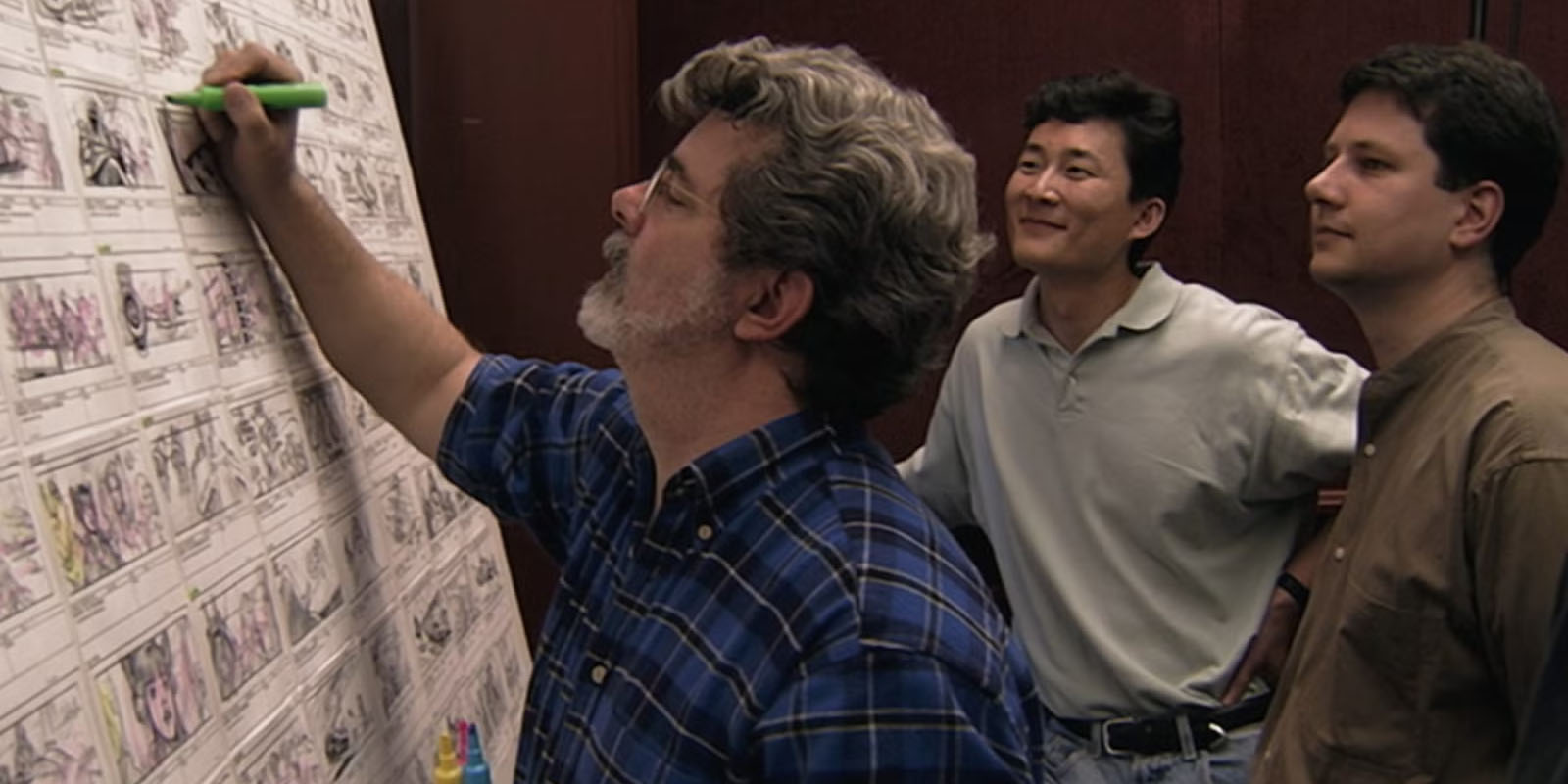
It’s fascinating to see how George Lucas spent twenty years and tens of millions of dollars to convert the whole industry to digital. I loved the footage of the “digital summit” Mr. Lucas held, in the midst of making the prequels. Whatever you think of the quality of the prequels, George Lucas clearly succeeded in transforming the industry and the very way in which movies are made! He deserves tremendous credit for that. I’m happy the doc did spend a little bit of time on the negative aspects of those industry-wide upheavals, such as the eventual closing of ILM’s model shop. I was also interested to see the bit of time spent towards the end of this season on the competition that ILM has faced in the past two decades from the many other visual effects houses that came to prominence in the aughts, such as WETA, who did extraordinary work on the Lord of the Rings films.
I loved this season — This was one of my favorite TV shows of 2025! — my only complaint is I wanted more! This second season was only three episodes long (whereas season one was twice as long, with six episodes). I hope we’ll get a third season soon. The Star Wars prequels and the Pirates of the Caribbean films came out more than twenty years ago! There’s lots of groundbreaking ILM work from the past two decades that could be covered. I hope we see more.
Please support my website by clicking through one of my Amazon links the next time you need to shop! As an Amazon Associate, I earn from qualifying purchases. That means I’ll receive a small percentage from ANY product you purchase from Amazon within 24 hours after clicking through. Thank you!